

I recently spent some time at the annual conference of the Society for Research on Educational Effectiveness (SREE). The conference was heavy on applied researchers, plus a handful of edtech and district attendees.
When I shared my background building data infrastructure for healthcare and my interest in education, the conversation often went to a version of this question:
What if there was an FDA-like regulator that required evidence before an educational intervention could be sold in the US?
A number of education research initiatives over the years have been modeled on clinical research, and the question has been asked repeatedly by education researchers who want more & better evidence to influence education decisions.
But the two fields approach evidence quite differently today. A new drug cannot be sold until evidence has been produced and reviewed. That requirement creates a market for evidence: drug developers buy it, and research firms and a broad supporting ecosystem sell it. In education, districts, foundations, and governments all have questions they want answered with evidence. But the market for producing it is sparse in the absence of a requirement.
My conversations at SREE comparing the two fields led to four questions that highlight some of the differences in how research is done in the two fields.
What if a startup had to finance an expensive study before it could sell its intervention?
What if a vendor could pay for research without making it less credible?
What if every study had a public result?
What if every product came with an independently reviewed label stating which uses its evidence supports?
To explore these questions, I wrote a short story set in a world where educational interventions are brought to market like new drugs. The story unfolds in four parts, with commentary between them on what each one would change. One feature of the hypothetical world is not on the list above because it’s not strictly part of the research journey, but it shapes the story as well. There is a public purchasing plan that negotiates prices, and normally pays only for approved uses. As you’ll see, it’s hard to unbundle healthcare and take just the parts you like.
The story was co-written with AI and a dose of heavy editing. The commentary that follows the story is my own words.
Introduction
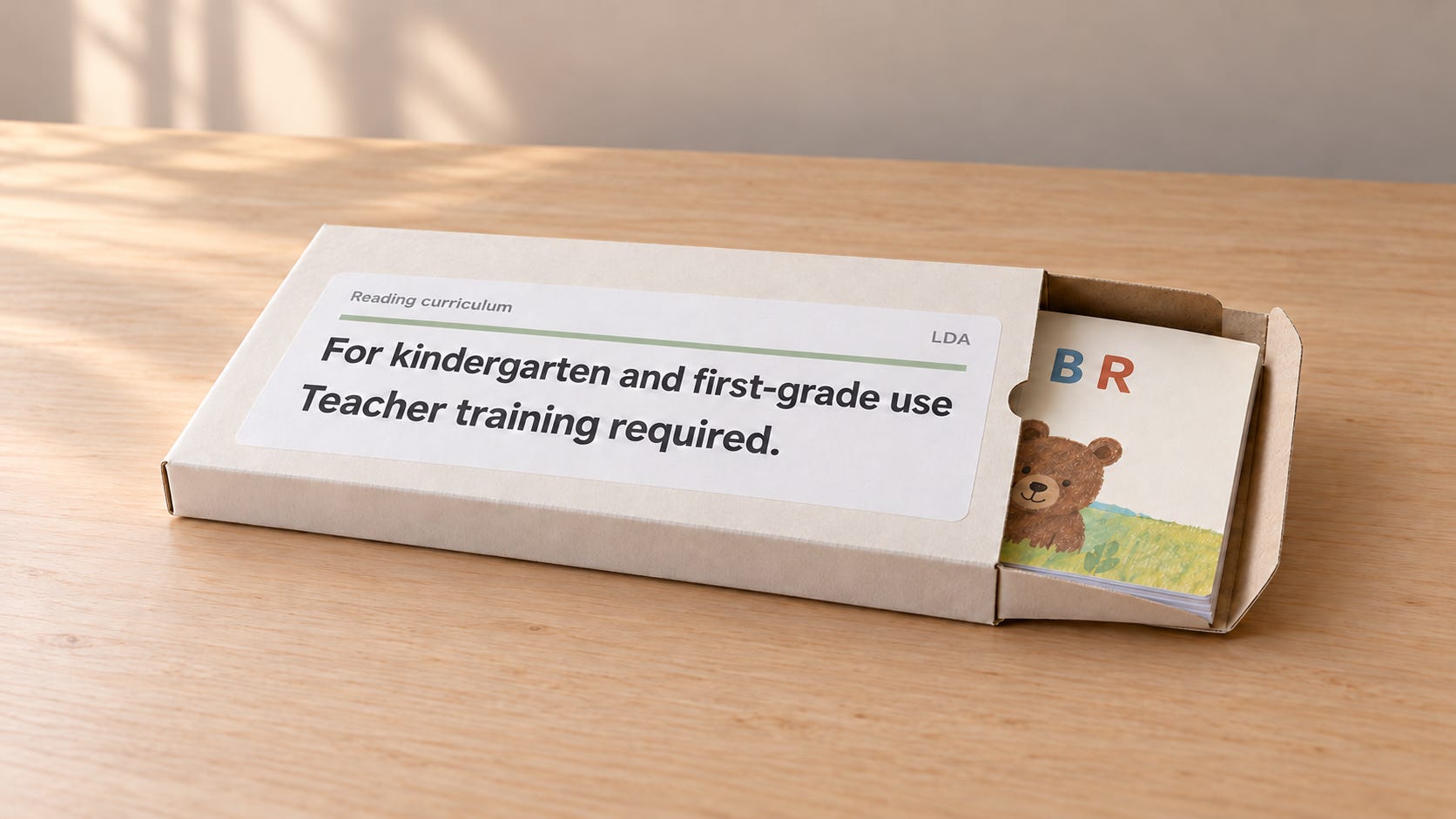
Professor Myra Zan, a researcher and former primary-school teacher, had developed an unusual reading curriculum: start without vowels.
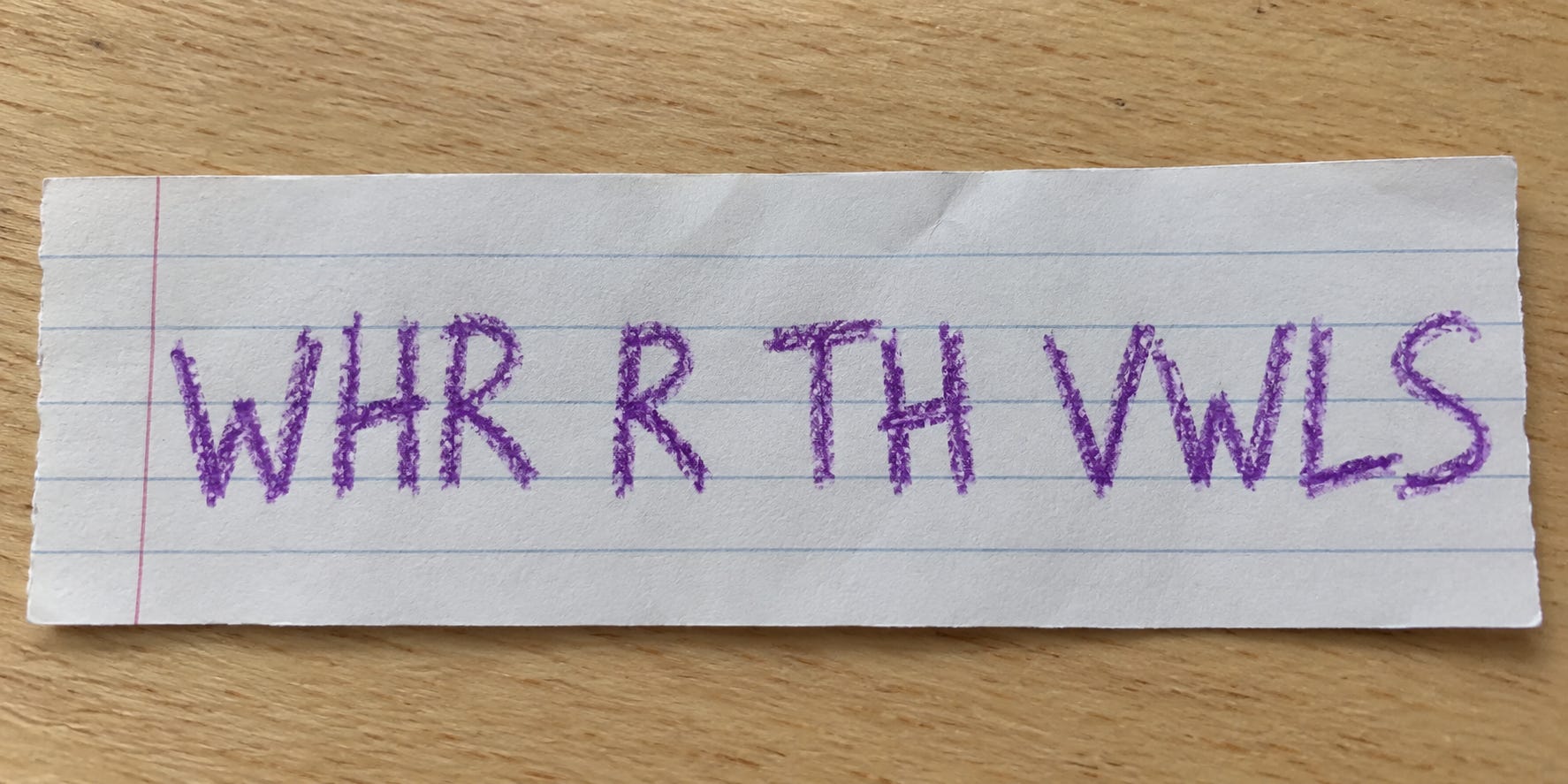
For six weeks, the kindergartners at Reed N Wright Elementary learned only consonants. One child had even submitted written feedback: WHR R TH VWLS.
The vowels arrived in week seven, and the children began reading unfamiliar words more confidently than before.
Myra repeated the experiment in another classroom. It happened again.
After twelve years researching reading, she finally had something she could put in a classroom. She formed a company that would spin out of her research lab. But she didn’t yet have a legal right to sell the product.
In this world, new curricula needed approval from the Learning and Development Administration, or LDA. Before selling her method, Myra had to demonstrate that it worked.
Chapter 1. What if a startup had to finance an expensive study before it could sell its intervention?
Myra took her findings to Tavik, whose research firm ran large studies.
“The gains are largest on passages they practiced,” Tavik said.
“Yes, but there are gains on unfamiliar passages too,” Myra replied.
“In classrooms you taught. We need to find out whether this works when you aren’t in the classroom.”
“That’s why I’m here.”
Tavik smiled. They were going to get along.
Kindergarten and first-grade classrooms would be assigned by chance to Myra’s program or to one specified existing curriculum. Both groups would receive the same amount of reading instruction. Independent examiners would test the children.
Myra understood every requirement. Together, they cost more than her lab’s annual budget, and far more than her new company could raise.
Nilo, a representative of an established publisher, offered to finance the study, develop the materials, and take the curriculum to market.
His presentation showed millions in potential sales. Myra’s company would receive twenty percent—enough to fund her next four projects without applying for grants.
The next slide showed several million spent and nothing to sell.
“That risk,” Nilo said, “is why we want exclusive selling rights for ten years after approval.”
Myra’s university had patented her teaching sequence. The publisher wanted the sole right to sell it, not just permission to print the books. Competitors could offer other reading programs, but not copies of hers.
Then came the price: ten thousand dollars per classroom per year.
Myra had imagined teachers downloading her lessons for a very modest price.
“That’s the list price,” Nilo said. “The state learning plan negotiates a lower rate and pays most of the bill with public funding. The district’s share would be closer to a thousand.”
They negotiated discounts for schools outside the plan. Eventually, Myra signed.
What changes when studies are expensive?
This hypothetical world changes not just the timing and cost of the study. It also shapes who controls an idea, which ideas get financed at all, and what schools must pay to use them.
Myra is not just selling a curriculum. She also has to finance an uncertain research program before she can sell anything. That changes the investment she needs, which partners have leverage, and how much control she retains.
In the drug development world, smaller firms can sell or license promising treatments to larger companies with the resources to conduct later-stage trials and bring them to market. Similarly, in the fictional education market, a dependable route from successful research to sales might help attract investment in evidence. But it could also exclude promising ideas that cannot generate enough financial returns, or tools that are easily copied.
The high price also reflects the market exclusivity granted to the publisher, and the existence of a purchasing plan that pays most of the bill. You could have rigorous research without making those two choices, but they’re how this fictional world works.
Chapter 2. What if a vendor could pay for research without making it less credible?
At the next meeting, Tavik, the researcher who would run the study, laid out the study plan. His team would control the analysis. The LDA’s reviewers would have access to the underlying study records, not just a summary of results.
“Pretty standard,” Nilo agreed.
Before recruiting schools, Tavik visited Sula, the kindergarten teacher at Reed N Wright Elementary who had hosted Myra’s pilot. He shared a proposed study protocol with her for feedback.
“Fifty minutes?” she said, reading the protocol. “I only have thirty.”
“But you gave Myra fifty minutes.”
“Yes, I moved their science lab and shortened recess. I can do that for a short pilot. I cannot cancel science for the rest of the semester.”
They shortened the lessons and kept teaching time equal in both groups. Otherwise, they might discover that additional instruction helped children and accidentally award the credit to consonants.
Sula also helped with teacher training. In a practice session, one teacher encouraged children to guess every missing word.
“That isn’t what you meant, is it?” Sula asked Myra.
“No,” responded Myra, “Guessing doesn’t help the kids learn based on our proposed mechanism. We’ll need to revise the instruction to make it clear not to reward that.”
Together with Tavik, they revised the instructions and rolled out the updated study protocol. Nilo’s funding paid for these corrections, too.
What changes when vendor research is highly credible?
In my conversations at SREE, vendor funding seemed to impose a credibility penalty. Some buyers discounted the findings, and some researchers were reluctant to accept vendor funding in the first place.
The fictional world changes that expectation. Nilo, the publisher, pays testing the product because evidence is required to sell, and he has a compelling incentive to pay for evidence in the form of product sales. The LDA review protects the study’s independence and also bolsters Nilo’s and Tavik’s credibility by having a disinterested party uphold the rigor of the evidence.
On paper, education’s standards for judging evidence don’t penalize vendor funding: ESSA’s evidence tiers and the What Works Clearinghouse focus on a study’s design, quality, and findings, not who funds it. So the discount is cultural, not formal. One possible reason is the level of scrutiny. The WWC reviews a study’s reported methods and results; the FDA, like our fictional LDA, also checks the underlying data and can inspect study sites.
But not every version of independent scrutiny needs an agency with the power to prohibit sales. Auditing provides another model. Financial or security audits by independent firms assess a company’s claims against defined criteria. The company pays the auditor. The auditor’s credibility rests on professional standards, legal liability, and its own reputation.
Independently scrutinized vendor-funded research could have valuable effects:
Vendors with credible products could invest more in studies that buyers actually value.
More researchers might conduct commercially funded research.
More non-commercial funding could go to important questions that lack an obvious commercial sponsor.
The net effect could be more research that buyers can trust.
Chapter 3. What if every study had a public result?
Before the first classroom began the larger study, Tavik entered its plan in the public registry: which children would participate, what the comparison schools would teach, which reading tests would be used, and how the results would be analyzed.
Nilo’s publisher appeared under “Funding,” with Myra’s small company listed as the developer.
Nilo paused over the date by which results had to be posted.
“We have to publish results, even if we decide not to launch the product?” he asked.
“Even then.” Tavik said. “The LDA requires publishing negative results to avoid publication bias, and allow future trials and participants to benefit from the contributions of the original participants and researchers.”
Two years of teaching and follow-up began. Some teachers brought the vowels back early. Others waited too long. Tavik’s team recorded the departures, reviewed the instructions, and continued assessing the children.
“Do the classrooms that deviated from the protocol still count?” Myra asked.
“Yes,” responded Tavik.
“Even though they didn’t follow the method?”
“We don’t get to keep only the classrooms where everything went to plan.”
When the study results finally came in, they were positive. The curriculum worked!
Children receiving the new program read unfamiliar passages better, on average, than those receiving the control curriculum. The improvement lasted into the following year.
The findings appeared beside the original plan. The modest benefit, the departures from the teaching schedule, and the study’s limitations were all there. Nilo’s marketing team could summarize them, but the full record was there in the public registry.
What changes when results have to be public?
Education already has the pieces in place: research standards, a registry, and some funders who require registration and public results. But unlike clinical trials in the US, education doesn’t require registration and results posting by law.
If all study results were public, education researchers and buyers could examine the full set of attempts and mitigate widespread publication bias.
But this would also change the calculus of commissioning research. If a company can no longer shelve a bad result, it might choose its studies more carefully. Some study sponsors might decide that no evidence is better than potentially bad evidence, especially if evidence remains optional.
Public results can make research more useful to everyone. The risk is that it could make research less attractive to the party paying for it.
Chapter 4. What if every product came with an independently reviewed label stating which uses its evidence supports?
Approval from the LDA arrived three years after Myra’s initial pilot in Sula’s classroom. The original kindergartners at Wright Elementary were in third grade. The district could now finally consider adopting the curriculum.
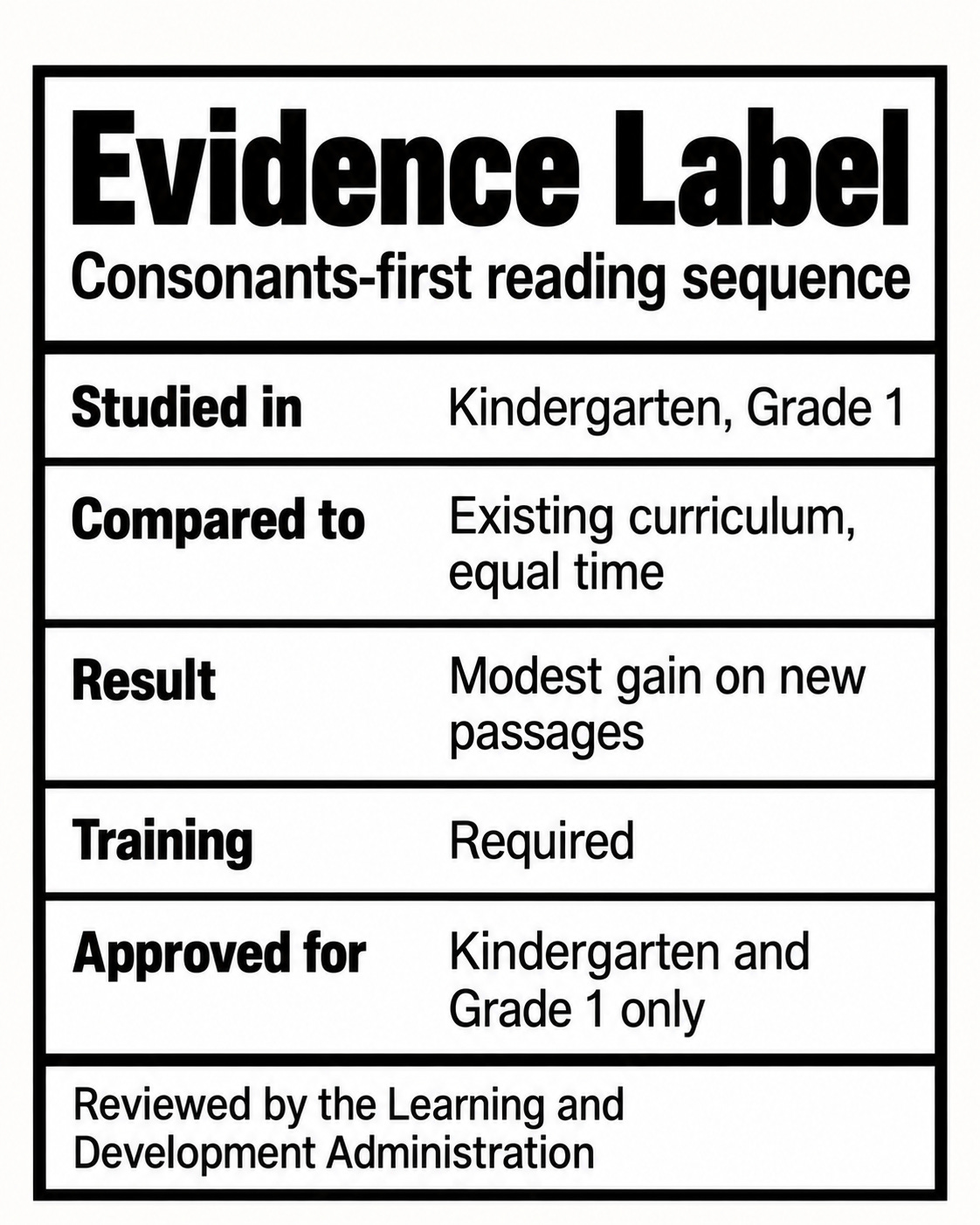
Sula brought the curriculum’s required evidence label to the district meeting where adoption was being reviewed. Every new product had to carry a label: an LDA-approved summary of the study listing the treatment information, study populations, control group, benefits, and other relevant information. Nilo’s publisher supplied it with the purchasing proposal for the district.
The label described the grades studied, the training required, the comparison curriculum, and the modest improvement the study had found. It linked to Tavik’s full report.
“So do we replace our reading curriculum?” a principal asked.
“Not automatically,” Sula said. “We have to see if we can provide the training. And understand if the comparison looks like what our schools already do. Is the improvement worth the cost?”
The study label spared the district from having to check every calculation. It had not answered every purchasing question.
Even after agreeing to purchase and adopt the new curriculum, the group still had questions.
Another teacher raised her hand. She had third-graders reading at a first-grade level. Could she use it with them?
“The approval is for kindergarten and first grade,” Sula said. “The study doesn’t answer that question.”
That did not mean the curriculum would fail with older children. It just meant the study had not looked at that question. The district could permit the use, but the learning plan normally paid only for approved uses, so funding required an exception.
Sula’s colleague explained why the existing options were insufficient and why she thought Myra’s method would help. Two months later, the district approved a limited exception, and the plan agreed to fund the third-graders at that school.
When Myra received the finished books from the first print run, she set aside copies for Sula and Tavik. On page seven was a warning:
PROLONGED VOWEL DEPRIVATION MAY IMPAIR READING DEVELOPMENT.
What changes when product labels constrain marketing?
In Myra’s world, a label is pretty close to a What Works Clearinghouse intervention report, with three differences: every product has to have one, the seller has to disclose it to potential buyers, and the seller cannot advertise claims that aren’t on the label.
As a side note, the district’s third-graders in the story are not constrained by the label per se. They’re constrained by what the plan will pay for in this case. In medicine, doctors can prescribe medications “off-label” if they deem it appropriate. It’s the manufacturer who can’t advertise the off-label use until there’s evidence for it specifically. Not even when it seems really promising.
But even a great label leaves a lot of work for a buyer. Evidence that a program works is not evidence that it belongs in a particular district. I heard stories of rural superintendents who looked at research and said “that study was run in NYC, but we don’t know if it works in districts like mine.” Matthew Kraft’s 2020 paper, “Interpreting Effect Sizes of Education Interventions,” argues that an effect size means little on its own: it has to be read against the study’s design and sample, the program’s cost, and whether the result would hold at scale.
The control group matters too. A drug trial measures against a particular treatment and dose. In education, the control group often means “keep doing what you’re doing,” and that can even shift mid-study with a new district policy or an overlapping product rolled out to the same schools. A clear label enables you to see how similar the control group is to their classroom. But only if you actually read it.
Conclusion: What this world shows
I don’t think education requires its own FDA to generate better evidence. The existing infrastructure and institutions are already well-positioned to provide some of the benefits, without requiring things that would make education research prohibitively expensive, exclusive or time-consuming.
If you start from that position, then the questions we discussed are worth asking: whether evidence is required before sale, whether vendor money can be trusted, whether results go public, and what a label settles. And they aren’t independent of one another. For example, mandatory public reporting might make it easier to trust vendor-funded studies.
Some of these changes can be done unilaterally: a vendor can open itself up to independent scrutiny, a funder can ask for public results from any study it funds, and a buyer can require evidence for its own purchases. But adopting those conventions across the field is a collective decision.
Each of the four arrangements comes with a cost. Requiring evidence before sale incentivizes investment in evidence, but excludes ideas that cannot repay the investment. Independent scrutiny can make vendor-funded studies credible, but the scrutiny costs money and that has to come from somewhere. Public results make the field wiser, but unless evidence is required before sale, some sponsors may choose to just not run certain studies if the results have to be public. A well-reviewed label could save a district some work, but it prevents the seller from marketing additional off-label benefits, even if they seem promising.
If education wants to borrow from the clinical world, the real questions are: which of these costs are worth paying, and who should pay for them?
I do wish education experiments and results were open sourced. This would open schools up to criticism but I think that sharing what's working (and not) is important, so parents and teachers can make informed decisions. With AI we have a chance to have a much more bespoke support for education even with standard testing and scalable approaches. I really think we can "have our cake and eat it to" but it will require broadly sharing ideas and being willing to experiment more (at the grade and teacher level, not just distict!) based on the temperment of a student and their class/cohort